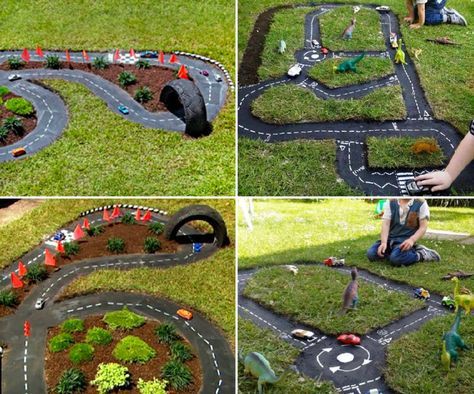
The Thrilling World of Kids Race Tracks: More Than Just a Game
In an age dominated by screens, finding toys that genuinely engage children's minds and bodies is a quest for many parents. Enter the humble yet incredibly powerful Piste De Course Enfant, or kids race track. Far from being a mere pastime, these dynamic play sets are veritable incubators for developing crucial skills, sparking imagination, and fostering a love for hands-on learning. From the moment children unbox a race track kit, they embark on an adventure of construction, creativity, and exhilarating play, building not just circuits but also their cognitive and physical capabilities.
A well-designed children's race track offers a unique blend of excitement and education. It's a gift that keeps on giving, perfect for birthdays, holidays, or simply as a special surprise, providing countless hours of entertainment. But the true magic lies in its ability to transcend simple amusement, becoming a tool that profoundly impacts a child's development. Let's delve into how these captivating toy car tracks become a springboard for creativity, fine motor skills, and much more.
Beyond Just Play: The Creative Spark of Kids Race Tracks
One of the most immediate and profound benefits of a Piste De Course Enfant is its capacity to ignite a child's creativity and imagination. Unlike passive entertainment, a race track invites children to become architects and engineers of their own miniature worlds. The process begins with assembly, where children are presented with various track pieces – straightaways, sharp turns, steep slopes, and even daring loops. This is where their imagination takes flight:
- Building & Customization: Children aren't just following instructions; they're experimenting. They might try different configurations, envisioning how each bend and rise will affect the speed and trajectory of their toy cars. This iterative process of building, testing, and modifying fosters an inventive spirit. They learn that there isn't just one right way to build a track, opening doors to endless possibilities and unique designs.
- Problem-Solving in Action: Encountering a challenge, like making a car successfully navigate a complex loop or preventing it from flying off a curve, naturally encourages problem-solving. Children must think critically, adjust angles, perhaps even add support or change the order of pieces. This hands-on problem-solving hones their ability to analyze situations and devise solutions, a skill invaluable in all areas of life.
- Spatial Thinking & Planning: Constructing a multi-dimensional track demands spatial reasoning. Children learn to visualize how pieces fit together in three-dimensional space, understanding concepts like distance, height, and angle. They plan their layouts, considering how to connect different sections to create a cohesive and exciting racing experience. This early exposure to spatial puzzles lays a foundational understanding for future STEM concepts.
- Narrative & Storytelling: Once the track is built, the imaginative play continues. Children often create elaborate scenarios around their races – who are the drivers? What are the stakes? Is it a championship race or an epic rescue mission? The track becomes a stage for imaginative storytelling, enhancing language development and narrative skills.
The exhilarating features like tight virages, sudden descents, and gravity-defying boucles transform a simple track into an adventure. Each element presents a new challenge and an opportunity for creative expression, ensuring that the play remains fresh and engaging for hours on end.
Fine-Tuning Motor Skills and Hand-Eye Coordination
Beyond the mental gymnastics, a Piste De Course Enfant is an excellent tool for developing crucial physical skills, particularly fine motor skills and hand-eye coordination. These are fundamental for a child's overall development, impacting everything from writing to sports.
- Fine Motor Skill Development: The act of snapping together track pieces, often small and requiring precise manipulation, is a fantastic workout for little fingers. Children learn to grasp, push, pull, and twist with increasing dexterity. This strengthens the small muscles in their hands and fingers, improving their control and precision – skills vital for tasks like buttoning clothes, tying shoelaces, and eventually, writing.
- Hand-Eye Coordination: Once the track is built, the racing begins! Operating the toy cars, whether by pushing them along, launching them, or guiding them with remote controls, directly enhances hand-eye coordination. Children must track the moving vehicle with their eyes and respond with precise hand movements, anticipating turns and regulating speed. This continuous feedback loop refines their visual processing and motor response.
- Concentration and Precision: Building a track that functions smoothly requires a degree of concentration. Children learn to focus on the task at hand, ensuring pieces are aligned correctly and connections are secure. During races, maintaining focus on the fast-moving cars, especially on tracks with complex elements, further hones their concentration abilities. The need for precision in placing cars or triggering mechanisms teaches them the value of careful execution.
- Cause and Effect: Observing how a car behaves differently on a steep incline versus a flat stretch, or how a loose connection causes a derailment, teaches children about cause and effect. This practical understanding of basic physics helps them connect their actions to observable outcomes, fostering an early understanding of how the physical world works.
The robust construction of modern kids race tracks means they can withstand repeated assembly and thrilling races, providing consistent opportunities for these essential skills to develop through joyful play. For insights into finding tracks that stand up to the challenge, you might find Easy Assembly & Safe Fun: Your Guide to Kids Race Tracks particularly helpful.
The Educational Advantages of Constructive Play
A Piste De Course Enfant is more than just a toy; it's an educational platform disguised as endless fun. The constructive nature of these games inherently embeds valuable learning experiences that extend far beyond the racetrack itself.
- Introduction to STEM Principles: Without even realizing it, children are introduced to fundamental concepts of Science, Technology, Engineering, and Mathematics (STEM). They experiment with gravity, momentum, friction, and structural integrity. Building a sturdy bridge or a stable loop involves basic engineering principles, while timing races or counting laps introduces simple mathematical concepts.
- Social and Emotional Development: Race tracks are fantastic for solo play, but they truly shine in group settings. Playing with siblings, friends, or parents encourages collaboration, turn-taking, and healthy competition. Children learn to share resources, negotiate track designs, and celebrate successes (and handle losses) gracefully. This interaction helps develop crucial social skills, empathy, and emotional regulation. Shared experiences like building a grand race track together can also strengthen family bonds, creating lasting memories.
- Patience and Persistence: Building a complex track or perfecting a challenging race sequence isn't always instant. There might be frustrations when pieces don't fit, or cars crash. These moments teach children patience and the value of persistence. They learn that effort often leads to success, fostering resilience and a growth mindset.
- Adaptability and Flexibility: The modular nature of many race tracks encourages adaptability. If one design doesn't work, children can easily dismantle and rebuild, trying new configurations. This teaches them to be flexible in their thinking and not to be discouraged by initial setbacks, but rather to see them as opportunities for improvement.
These skills are not just for playtime; they are building blocks for academic success and life-long learning. Providing children with opportunities for constructive, imaginative play through a Piste De Course Enfant is an investment in their holistic development.
Choosing the Perfect Piste De Course Enfant: Tips for Parents
With so many options on the market, selecting the ideal Piste De Course Enfant can seem daunting. Here are some practical tips to help you make an informed choice that will maximize its developmental benefits and provide safe, endless fun:
- Age Appropriateness: Most kids race tracks are designed for children aged 3 years and older. Always check the manufacturer's recommendations to ensure the toy is suitable for your child's developmental stage and doesn't contain small parts that could pose a choking hazard for younger children.
- Safety and Durability: Prioritize tracks made from non-toxic, durable materials. Look for robust construction that can withstand enthusiastic play and frequent assembly/disassembly. Quality materials ensure longevity and most importantly, your child's safety.
- Ease of Assembly and Storage: For busy parents, an easy-to-assemble and disassemble track is a huge plus. Tracks that click together intuitively and can be stored compactly make life simpler and encourage more frequent play.
- Features and Flexibility:
- Modular Design: Tracks with modular, flexible pieces offer the most creative freedom, allowing children to build endless configurations.
- Exciting Elements: Look for sets that include intriguing features like bridges, tunnels, glow-in-the-dark sections, steep ramps, or loops to enhance the thrill and challenge.
- Car Compatibility: Check if the track is compatible with other toy cars your child already owns, or if it comes with its own exciting vehicles.
- Consider Expansion Sets: Many brands offer expansion packs, allowing you to gradually grow the track system and introduce new elements over time, keeping the play fresh and exciting without needing a whole new set.
Remember, the best Piste De Course Enfant is one that your child will love and that encourages them to engage, explore, and create. It's about providing a platform for discovery, where every race is a new adventure and every build is a step forward in their development. You can find more comprehensive advice on selecting safe and enjoyable tracks in our guide, Easy Assembly & Safe Fun: Your Guide to Kids Race Tracks.
Conclusion
The allure of the Piste De Course Enfant is undeniable. It's a classic toy for a reason, offering immediate thrills and captivating entertainment. Yet, its true value lies deeper, in its profound ability to serve as a powerful catalyst for a child's growth. From sparking boundless creativity and fostering critical problem-solving skills to refining essential fine motor abilities and enhancing hand-eye coordination, these race tracks are truly multi-faceted developmental tools. They invite children into a world where they are the designers, the engineers, and the racers, learning invaluable lessons about physics, perseverance, and social interaction along the way. Investing in a high-quality kids race track isn't just about buying a toy; it's about providing an enriching, educational experience that will shape and inspire young minds for years to come.